SCALE
Automate GAAP, IFRS, and Tax Reporting with Multi-Book Accounting
Adapt to any standard or jurisdiction with LEDGER's compliant, automated multi-book accounting features.
Parallel financial reporting
View and compare financial statements side by side across multiple accounting standards—such as US GAAP, IFRS, or cash basis, with no data duplication. Instantly deliver tailored reports for statutory, tax, or industry-specific requirements, ensuring compliance across all reporting needs.
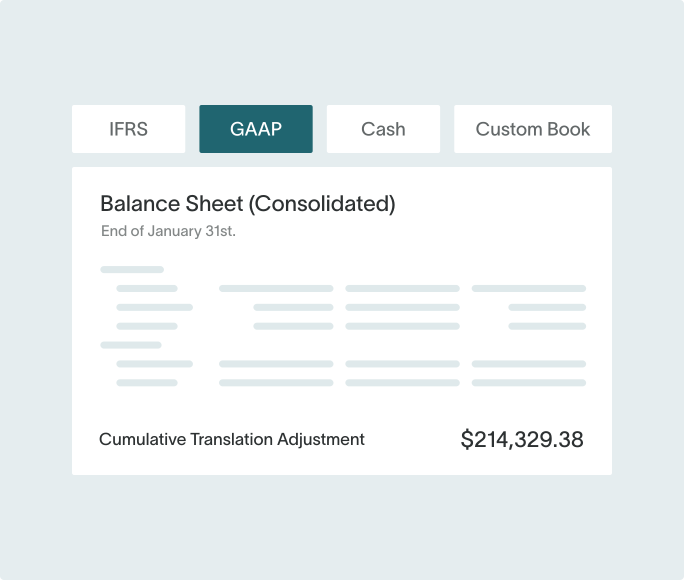
View all your books side by side, in real time
Real-time synchronization
Consilidate confidently with automated intercompany transactions. Easily manage and sort transactions on a centralized dashboard. No need to toggle between different accounting systems.

Intercompany AR / AP
Efficiently reconcile intercompany balances without manual adjustments. Create flexible journal entries for both one-off and recurring transactions. Automate recharge calculations to reduce errors.

Automated consolidation and elimination
Speed up your close with automated multi-entity consolidations. Post transactions in real time, at both subsidiary and elimination level, to consolidate faster while keeping your data in sync.

Unified, flexible reporting
Maintain a standardized GL while allowing regional entities to create custom charts of accounts. Accurately post local transactions to parent accounts, eliminate data normalization, and create timely, consolidated reports — including multi-book reporting.

Effortless set-up
Set up new entities without IT involvement in minutes, not days, and model your organizational structure as needed. Add entities and create tailored rules for inter-entity transactions with a few clicks.

Operational efficiency
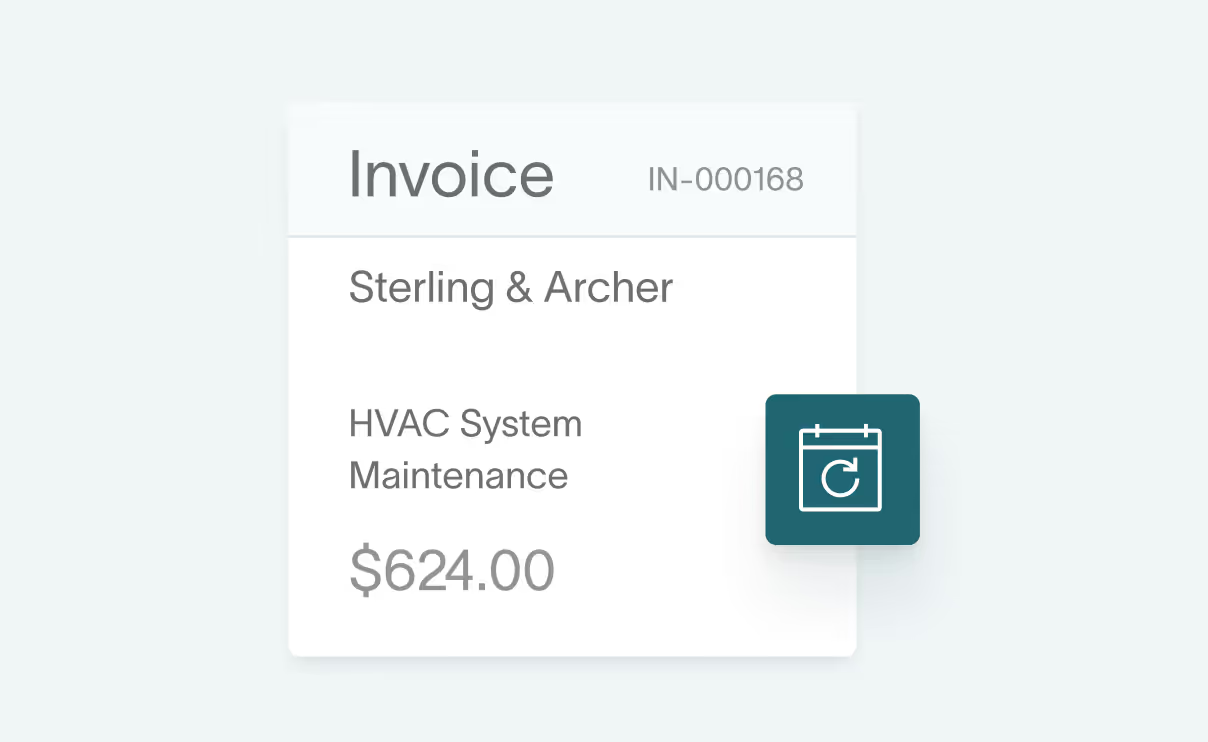
Automate recurring tasks like journal-entry posting, billing, invoicing, and reconciliation. Create flexible definitions for new entities, inheriting existing lists or adding custom specifications.
Get financial clarity faster
.svg)
Intercompany netting
Optimize your revenue-recognition strategy with LEDGER's intelligent suggestions. Let AI analyze contract structures, industry standards, and your historical data to recommend the most appropriate recognition methods. Automatically ensure compliance with IFRS 15 and ASC 606 while reducing manual decision-making.
Elimination and balancing
Streamline your contract-management process with AI-powered contract parsing. LEDGER automatically extracts key data from contracts, including performance obligations, payment terms, and billing schedules. This automation eliminates manual data entry, reduces errors, and accelerates the onboarding of new contracts.
Guided allocations
Enhance your financial integrity with advanced anomaly detection. LEDGER AI identifies potential revenue-recognition errors, irregularities, or fraudulent activities by comparing current patterns with your historical data. This real-time monitoring keeps your enterprise audit-ready and shielded from financial risks.
Consolidate in real time with global and local insights
Complete financial visibility
Get consolidated and entity-specific statements with instant dashboard insights. See key metrics—from group gross margin to consolidated operating income—in real time.

Customizable intercompany reports
Create tailored reports with advanced analytics for strategic planning. Schedule report delivery and automate the generation of key financial statements, including intercompany AP/AR reports.

Intuitive, self-service interface
Access real-time data and detailed drilldowns without technical complexities. View multiple company files side by side and run combined reports to improve your reporting accuracy.

Multi Entity Accounting Software FAQ
Multi-entity accounting is the financial management of multiple subsidiaries, business units, or legal entities, all under one system. The more entities operate under a company the more difficult and complex it becomes to manage their financial data. This is why if you manage multiple entities it is a good idea to use a multi entity accounting software.
The difference between single entity and multi-entity in accounting is that single entity tracks the finance of a single company or legal entity, on the other hand, multi-entity accounting tracks multiple entities, each of which may have different currencies and tax rules, and centralizes the data, automates processes, and consolidates financial statements.
Multi-entity accounting software is a tool that handles multi-entity accounting—automating multicurrency transactions, simplifying and automating inter-entity transactions, and consolidating reporting all in one system.
The best multi-entity accounting software should be a modern ERP system that can handle all the accounting nuances of multi-entity accounting like: Intercompany AR / AP, Fast set-up of new entities, AI intercompany netting, AI-guided allocations, Consolidated exchange rates and tax compliance across different jurisdictions. These all should work in harmony and help your team save hours and not spend more trying to learn a complex piece of software from scratch. So, if you are a growing team struggling with multi-entity accounting you should definitely consider giving LEDGER a try.
LEDGER is probably the best ERP software with multi-entity accounting features as it is AI native and offers automations other software weren't built to offer. With LEDGER AI's netting and elimination tools you can automatically create transaction settlements and post elimination journal entries. AI-generated allocation suggestions based on your data and preferred form of expense distribution will save you tons of time and streamline closing. With real time reporting you can run subsidiary-level or consolidated reports at any time, without needing to wait until the month end, And these are just a few of LEDGER's multi-entity features. To learn more contacts us here.
LEDGER not only handles intercompany transactions but with the AI intercompany netting and elimination tools it automatically creates transaction settlements and post elimination journal entries.
Evaluating multi-entity accounting requires looking beyond features to consolidation logic, intercompany workflows, and reporting structure. A structured ERP evaluation framework helps teams compare these capabilities consistently across vendors.